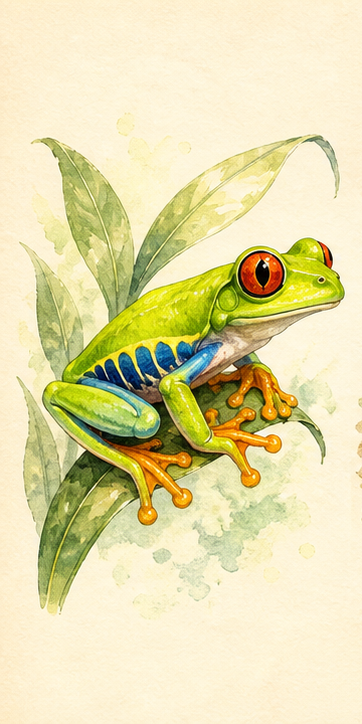
Rainforest acrobat
Red-eyed tree frog
Home Central American rainforests
Sticky toe pads make leaves and branches a natural climbing gym. Its bright colors can startle predators.
A tiny tour of amphibian ingenuity
Six species. Six remarkable ways to climb, hide, hunt, warn, defend, and burrow.
Hop into the guide ↓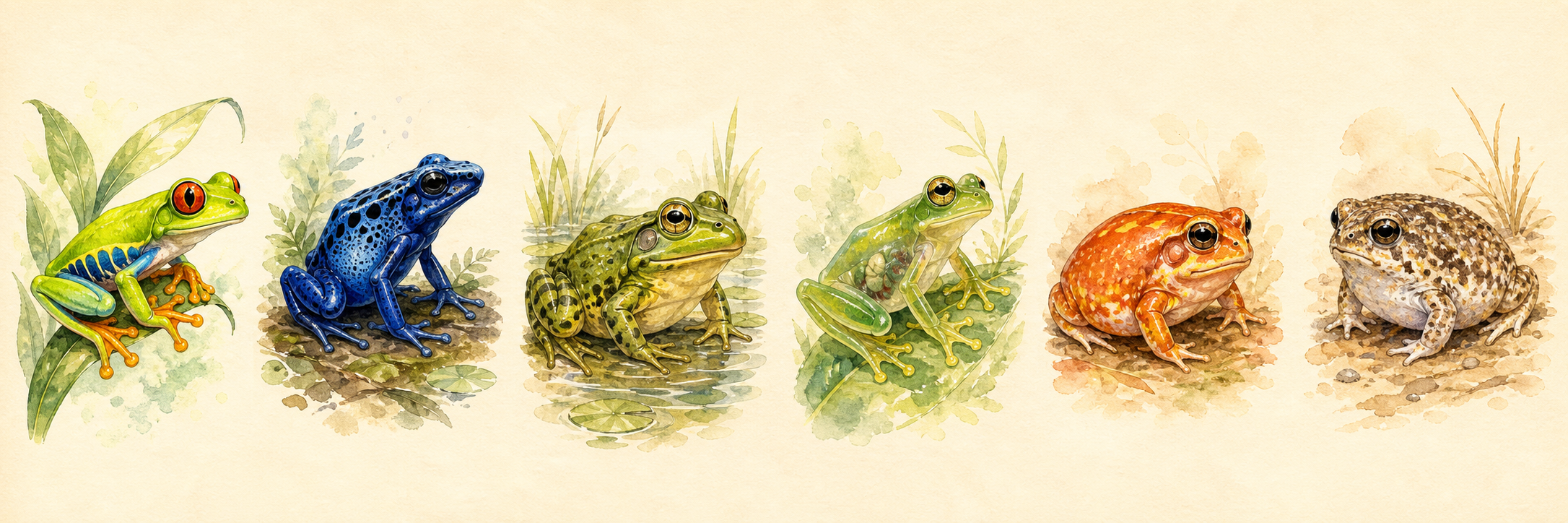
Meet the lineup
Scroll through the field guide to discover each frog’s home and signature survival skill.
Rainforest acrobat
Home Central American rainforests
Sticky toe pads make leaves and branches a natural climbing gym. Its bright colors can startle predators.
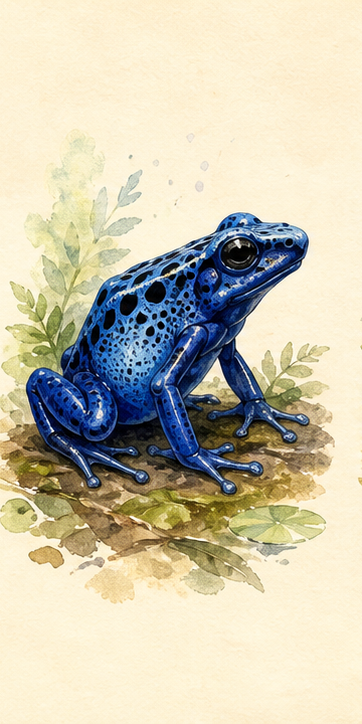
Tiny but boldly colored
Home Tropical forests of Suriname
Vivid blue skin sends a warning. In the wild, its diet helps create defensive skin toxins.
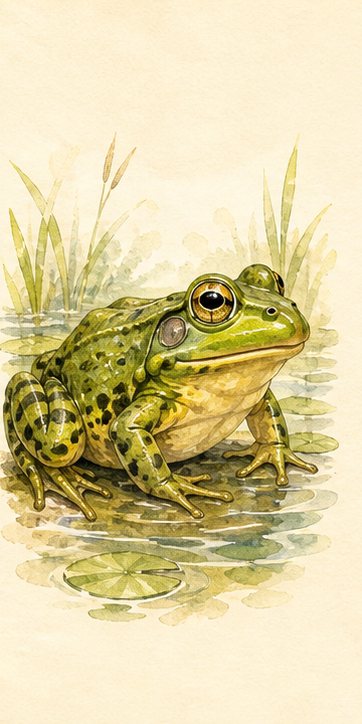
The pond heavyweight
Home Lakes, ponds, and marshes
One of North America’s largest frogs, with a deep call that sounds a little like “jug-o-rum.”
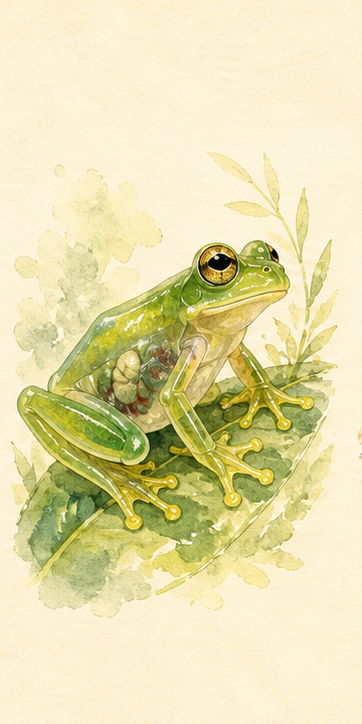
The see-through sleeper
Home Central and South American cloud forests
Translucent skin softens its outline on leaves. Some organs can be seen through its belly.
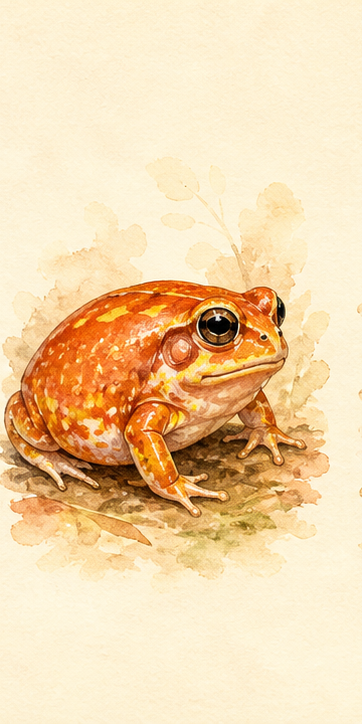
A bright red defender
Home Madagascar’s rainforests and wetlands
When threatened, it puffs up and releases a sticky substance that discourages predators.
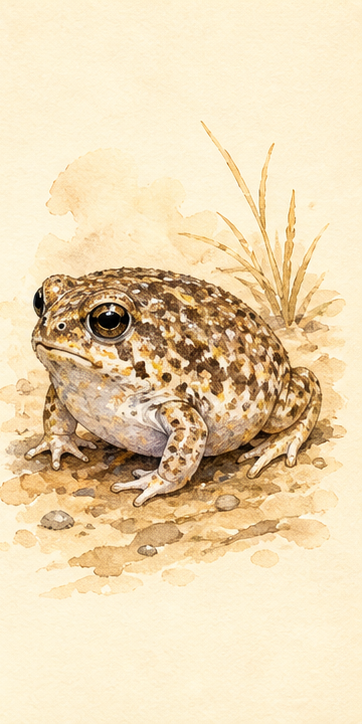
Built for sandy nights
Home Coastal dunes of Namibia and South Africa
It burrows into moist sand and emerges at night. Short legs make it a walker rather than a champion jumper.
The big idea
Color, size, skin, and habitat each solve a different survival problem.